In House or Outsourced Fulfilment
Uncategorized

In-House vs Outsourced Clothing Fulfilment: Cost, Control and When to Switch

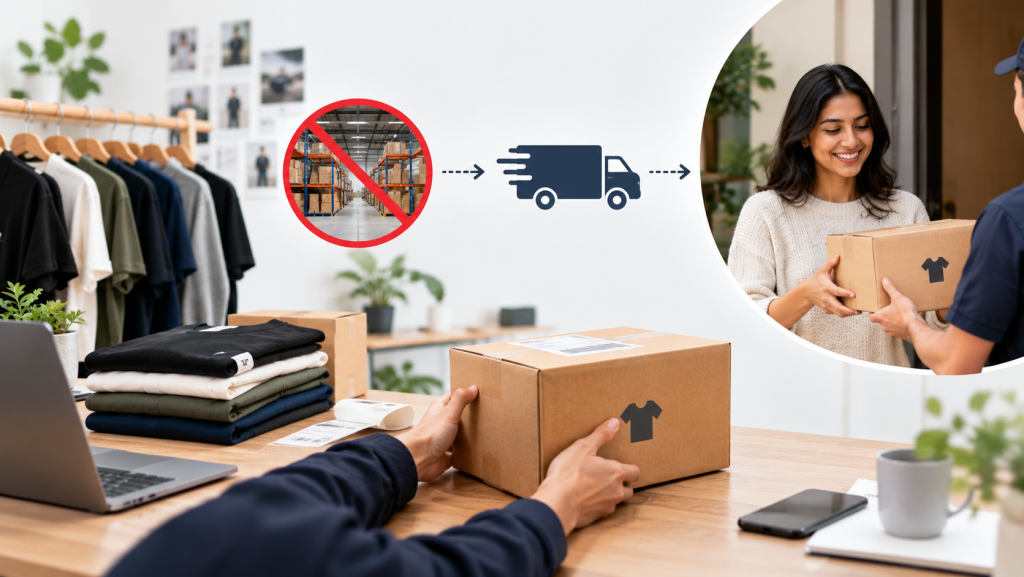
Objective This blog helps UK trade buyers compare packing orders in-house with outsourcing, so you can judge cost, control and when to switch. Key Takeaways Doing it yourself keeps everything close, while a partner takes over the counting, labelling, packing and dispatch. Uniform World does not publish fixed prices, so compare handling, mistakes and volume, then ask for a tailored quote. Repeat orders, several delivery sites and strict labelling rules often signal that outsourcing may suit you better. Want to see how this approach would work for your next order? Request a quote from the Uniform World trade team. Whether your garments are packed on a spare table or in a unit you rent, there usually comes a point where the boxes feel like a second job. Many trade buyers reach it just as orders grow, and the question becomes whether outsourced clothing fulfilment UK support could give you your time back without costing you control of quality. You might think it is only about price, but handling, mistakes and delivery matter just as much. Let’s look at what each setup involves, what it costs you in time and money, and how to spot the right moment to change. Table of Contents In-House vs Outsourced Fulfilment: The Real Difference Clothing Fulfilment Cost: Where Your Money Goes What Changes When Outsourcing Garment Packing? Garment Packing and Dispatch: Day-to-Day Signs It May Be Time to Switch How a Switch Works Ready to Hand Over the Boxes? FAQs In-House vs Outsourced Fulfilment: The Real Difference In-house means your own team counts, labels, packs and posts every order, so you see each step but carry every mix-up yourself. Outsourced means a partner handles that work after the garments are made, which many people face as orders grow. What Uniform World Takes On Finishing and fulfilment covers final inspection, pressing and steaming, size sorting and order collation, folding, bagging and carton packing, labelling and barcodes, and bulk, split or direct-to-client dispatch. Who It Is For The service is trade-only, so it suits brands, uniform suppliers, workwear brands and wholesale distributors. If you already buy from clothing manufacturers UK, ask whether the team making your garments can also finish and ship them, since fulfilment links directly with manufacturing and decoration. Clothing Fulfilment Cost: Where Your Money Goes Uniform World does not display fixed pricing and prepares quotes around your specifications, so it is more useful to look at what shapes your costs than to guess at figures. Handling and Mistakes Packing in-house adds to your logistics, and one wrong carton can hold up a delivery. Shipping directly from the Uniform World facility reduces internal handling, and streamlined processes aim to minimise miscounts, mismatches and delays. Volume and Quotes Finishing and fulfilment starts at 10 pieces per size, while garment production starts from around 100 units. Embroidery and DTF printing use volume-based pricing. Share your garment details, quantities and delivery needs, and the trade team will recommend the most efficient setup, which you can compare with your packing costs in time and corrections. What Changes When Outsourcing Garment Packing? Handing packing to someone else can feel like losing control, but the site shows where your say stays with you. Checks and Instructions Every garment is reviewed before shipping through visual inspection, compliance checks, counting verification and a labelling review. Client-specific packing instructions are followed, and shipping can be discreet and brand-aligned. With order fulfilment services built around your brief, customers see your brand and standards. Tax tabs, size, care, content and country-of-origin labels can be applied during finishing, even on garments you supply. You hand over the daily counting, folding and cartons, while decisions about presentation and where each order goes stay yours. Tip: Share your buyer’s labelling rules at the briefing stage, because requirements differ by buyer and destination country. Garment Packing and Dispatch: Day to Day Once packing leaves your hands, the way orders go out changes too. Delivery and Repeat Supply Say you supply uniforms to more than one site. Uniform World supports direct-to-client, site-based, multi-location and split deliveries, with documentation and tracking support and shipping covers the whole of the UK. It is also set up for long-term supply, contract fulfilment and repeat dispatch schedules. Because finishing and fulfilment connect to manufacturing, embroidery and printing, the whole garment packing and dispatch stage follows production rather than sitting apart from it. Signs It May Be Time to Switch A few small frustrations usually pile up until in-house vs outsourced fulfilment stops being theory and becomes a daily problem. Outsourced clothing fulfilment UK support here is built for trade buyers. Your situation What it means What Uniform World offers Orders go to several sites Splitting and re-boxing takes time Split and multi-location deliveries Orders repeat or run on contract The same job keeps returning Repeat dispatch schedules Buyers set strict labelling rules Labels must be right before shipping Tax tabs, care and origin labels at finishing Miscounts reach customers Delays and frustration Counting verification and labelling review Note: For a very small test run, speak to the team first, since production starts from 100 units and finishes from 10 pieces per size. How a Switch Works Moving to outsourced clothing fulfilment UK support mostly means sharing the right details early. The site sets out a simple path. Share your product requirements with the trade team. Receive production guidance and a quotation. Approve samples before production begins. Production and quality checks take place before dispatch. Receive delivery, or direct-to-client dispatch. Have your size breakdown, delivery locations and any client packing or labelling instructions ready from the start. Ready to Hand Over the Boxes? Handing over the counting and cartons does not mean handing over your standards. When you weigh outsourcing garment packing against doing it yourself, ask how much time your team loses, how often a mix-up reaches a customer, and whether your orders now repeat or travel to several places. If that sounds familiar, outsourced clothing fulfilment UK support from a team that checks

Apparel Warehouse Inventory
Uncategorized

How to Choose a Clothing Fulfilment Partner: 12 Questions to Ask

Objective This blog gives trade buyers 12 clear questions to ask before handing off finishing, packing and dispatch to a fulfilment partner. Key Takeaways The right questions show how a partner checks, packs and ships an order before any mistakes reach your customer. Look beyond price to labelling, split deliveries, order size and UK-wide delivery. One team for manufacturing, decoration and dispatch means fewer hand-offs. Once your garments are made, who makes sure the right sizes reach the right door? Many people face this question late, often after a carton arrives short or a label turns out wrong, and you may feel the blame lands on you even though the clothes were fine. A reliable clothing fulfilment partner UK buyers can trust takes that worry off your desk, and the easiest way to find one is to ask sharper questions before you sign up for any B2B fulfilment services. Below are 12 questions, grouped by what they reveal, so you can compare providers calmly and spot the right fit for your orders. Table of Contents What Does a Clothing Fulfilment Company UK Trade Buyers Hire Actually Do? Which Fulfilment Partner Questions Show How Garments Are Checked and Finished? What Should You Ask an Apparel Fulfilment Provider About Packing and Dispatch? How Does Outsourced Garment Fulfilment Fit Your Order Size and Growth? How Do You Turn These Answers Into a Confident Decision? FAQs What Does a Clothing Fulfilment Company UK Trade Buyers Hire Actually Do? A clothing fulfilment company UK buyers rely on takes finished garments and gets them checked, packed and delivered to the people waiting for them. At Uniform World, this process covers finishing, quality checks, labelling and dispatch for trade buyers, brands and distributors. Why Questions Tell You More Than a Quote Fulfilment comes after production and decoration, when counts, sizes and labels are confirmed. Trade quotes are tailored to each specification, so price alone says little about which clothing fulfilment partner UK buyers should trust, while clear answers about process show you far more. Which Fulfilment Partner Questions Show How Garments Are Checked and Finished? The first four fulfilment partner questions reveal whether quality is checked before cartons close. A partner who answers them plainly usually runs a tidy process. 1. What Happens to My Garments Before Packing? Listen for final inspection, pressing, steaming and finishing as normal steps. Garments should leave production fully prepared instead of going into boxes straight off the line. 2. How Do You Check Counts, Sizes and Labels? Ask to hear the actual checks. Uniform World reviews size, quantity, labelling and packing accuracy before anything ships, and a partner who cannot describe a counting process may be taking unnecessary risks. 3. Can You Apply Compliance Labels? Some garments need tax tabs, country-of-origin marks or size, care and content labels. Ask how a partner handles uniform labelling compliance and whether they work to your buyer’s own specification, as correct labelling avoids delays, rejections and rework. 4. What Happens if Garments Need Adjusting? Fit changes across a large run are easier to fix before packing than after delivery. Uniform World offers bulk order alterations, so ask any provider whether adjustments can be made during finishing. What Should You Ask an Apparel Fulfilment Provider About Packing and Dispatch? Packing and dispatch decide what your customer actually opens. Questions 5 to 8 show how an apparel fulfilment provider sorts, labels and sends your order. 5. Can You Split Orders Across Several Sites? Say you supply workwear to three depots. With split deliveries each site gets its own carton, so nobody has to sort one big shipment by hand. Uniform World supports multi-location and split deliveries. 6. Can You Ship Straight to My Customers? Direct shipping saves you from handling every parcel yourself. Uniform World supports brand-aligned shipping based on your instructions, so ask whether a provider can pack and label to your requirements. 7. What Tracking and Paperwork Do You Provide? You will want to know where an order is without chasing anyone. Delivery documentation and tracking support keep you and your customer informed. 8. Do You Deliver Across the UK? Any clothing fulfilment partner that UK buyers shortlist should be able to deliver nationwide. Uniform World manages its fulfilment operations within the UK and supports shipping across the country for trade accounts. How Does Outsourced Garment Fulfilment Fit Your Order Size and Growth? Outsourced garment fulfilment works best when the partner suits your volumes today and your plans for next year. These last four questions look at order size, repeat supply and how joined up the whole setup is. 9. What Is Your Minimum Order? Minimums differ by service, so ask early. Finishing and fulfilment at Uniform World starts from 10 pieces per size, while bespoke garment manufacturing starts from 100 units. 10. Can You Support Repeat and Contract Orders? Many buyers reorder the same lines again and again. Check that the partner is set up for long-term supply and repeat dispatch schedules, not only one-off jobs. 11. Can Manufacturing, Decoration and Dispatch Work Together? Every extra hand-off is another chance for a mix-up. Uniform World can make the garments, add embroidery or DTF printing in-house and then finish and dispatch them, which keeps the order with one team. 12. What Does the Process Look Like From Brief to Delivery? Ask for the steps in order. At Uniform World, it runs from your requirements and tech pack through sampling and approval, bulk production, decoration, finishing and packing, to direct shipping to your client. How Do You Turn These Answers Into a Confident Decision? Write the answers side by side and see who explains things most clearly. The partner who answers openly and with detail is usually the one who keeps you informed later. If your garments also need logos, it helps to choose a team that handles embroidery printing and fulfilment together, because the people finishing your order already know how the decorated garment should look. Many buyers feel unsure at this point, and

UK Warehouse fulfilment essentials
Uncategorized

Clothing Fulfilment Services UK: The Complete Guide for Brands

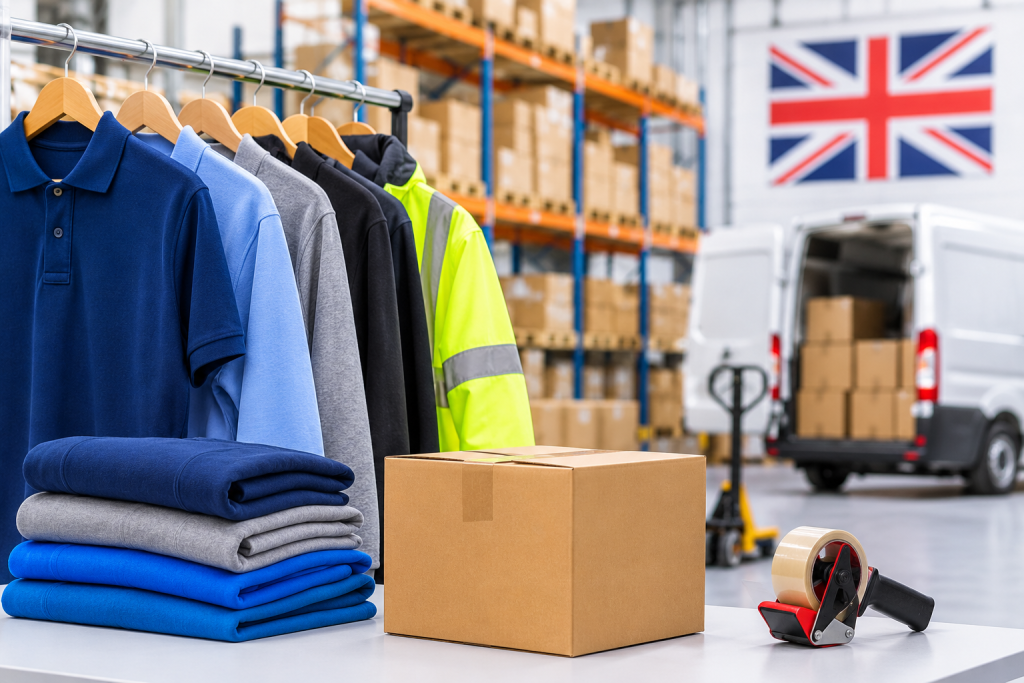
Objective This guide explains how clothing fulfilment works for trade buyers in the UK, from finishing and packing to final delivery, so you can pick the right partner for your next order. Key Takeaways Fulfilment covers finishing, size sorting, labelling, packing and dispatch, which is much more than posting a box. Trade fulfilment is built for bulk, split and repeat orders, so it works differently from online shop parcels. One partner from manufacturing to delivery means fewer hand-offs and fewer mistakes. Ready to plan your next order? Request a fulfilment quote from the Uniform World trade team and share your garment details, quantities and delivery needs. Introduction How many hours does your team lose to matching size labels, taping cartons and booking couriers once a bulk garment order comes off the production line? For a lot of brands, making the clothes turns out to be the easier part, and the sorting, labelling and sending can start to feel like a second full-time job. That is where clothing fulfilment services UK buyers trust can save hours every week, because someone else counts, packs and sends each order properly. Moreover, the right partner can connect with your garment manufacturing, so nothing gets lost between the factory and the doorstep. Below, we walk through what these services include, how trade fulfilment works, and what to check before you choose a partner. Table of Contents What Is Included in Clothing Fulfilment Services? How Is B2B Clothing Fulfilment Different From Online Shop Fulfilment? Where Does Clothing Fulfilment in Birmingham Fit in Your Supply Chain? What Should Workwear Fulfilment Services Handle for Uniform Brands? What Should You Check Before Choosing a Fulfilment Partner? How Can the Right Partner Take Pressure Off Your Next Order? Frequently Asked Questions What Is Included in Clothing Fulfilment Services? Clothing fulfilment is everything that happens after garments are made and before they reach the person waiting for them. In practice, it means finishing, sorting, labelling, packing and dispatch handled as one smooth flow. Finishing Before Anything Is Packed Every garment gets a final inspection, then pressing and steaming, so pieces arrive looking ready to wear instead of creased from the production floor. Uniform World runs these checks as part of its finishing and fulfilment service. Sorting, Labelling and Packing Garments are sorted by size and collated into orders, then folded, bagged and placed into cartons, with labels, tags and barcodes added at the same stage so you don’t have to add them by hand. This is the clothing packing and dispatch side of the work, and it is where totals get checked against your order. Repacking and Adjustments Repacking and adjustments are also part of the service, which means a small fix doesn’t have to hold up a whole delivery. Although it sounds minor, it often decides whether an order leaves on time. How Is B2B Clothing Fulfilment Different From Online Shop Fulfilment? B2B clothing fulfilment is built for large, accurate and repeat shipments, while online shop fulfilment mostly means single parcels for individual shoppers. Because of that, the best clothing fulfilment services UK trade buyers use are set up around bulk cartons and delivery schedules. Built for Trade Customers Only You might think a trade order is just a bigger parcel, but it needs different handling. Uniform World works with uniform suppliers, workwear brands and wholesale distributors, and it does not supply individual customers. Start Small, Grow Steady Finishing and fulfilment orders begin from 10 pieces per size, which suits brands that are still building volume. Furthermore, the same setup handles repeat and contract orders as your business grows. Checks Before Anything Ships Orders go through size, quantity, labelling and packing checks, plus a counting verification, before dispatch. For a distributor with several sites waiting on stock, one wrong carton can hold up the whole delivery, so these checks matter. Where Does Clothing Fulfilment in Birmingham Fit in Your Supply Chain? It sits at the very end of production, right after finishing and before delivery, and Uniform World manages it from its base in Handsworth, Birmingham. Fulfilment operations are run within the UK to keep things reliable and compliant. From Tech Pack to Dispatch The usual path runs through the tech pack, fabric selection, sampling and approval, bulk production, embroidery or printing, and then finishing and packing before shipping. When one team makes, decorates and fulfils the order, there are fewer hand-offs where things can go missing. Labels Sorted Before Packing Tax tabs and compliant garment labelling can be handled within the same job, so labels are right before a carton is ever closed. On the other hand, fixing labels after delivery is a slow and costly job for everyone. A Direct Delivery Service Without Extra Handling Uniform World’s direct delivery service sends garments straight to your site or end customer, including split and multi-location orders, with delivery documentation and tracking support. Brand-aligned, discreet shipping can follow your instructions too. What Should Workwear Fulfilment Services Handle for Uniform Brands? Workwear orders tend to be large, size-heavy and tied to teams or sites, so workwear fulfilment services need careful sorting, labelling and delivery. This is one reason many uniform buyers look for clothing fulfilment services in the UK that are based and trade-focused. Sizes That Match the Cartons Size sorting and order collation keep each size grouped with the right order, and counting checks confirm the totals against what you asked for. Nobody wants to open a carton and find the wrong sizes inside. Alterations on Large Runs If a size or fit needs changing, bulk order alterations can be handled across a big run as part of finishing. Moreover, garments can be adjusted before they are packed, not after they have reached your customer. Branding That Arrives Intact Embroidery and DTF printing are done in-house, so decorated garments move straight into finishing and packing without travelling to another supplier. That keeps the branding you paid for looking sharp on arrival. What Should You Check Before Choosing a Fulfilment Partner?

Direct to Customer Apparel Delivery.
Uncategorized

Direct-to-Customer Shipping For Clothing Brands: How To Ship Branded Orders Without Running Your Own Warehouse

Objective This guide shows clothing brands how branded orders can travel from production to end customers without a warehouse of their own and what to check before choosing a partner. Key Takeaways Garments can be finished, labelled, packed and sent to customers from where they’re made. Checks on size, quantity and labels before dispatch help you avoid mix-ups and rejected deliveries. Split deliveries let one run reach many sites. Ready to see how this fits your next order? Request a shipping quote and our trade team will guide you. How do you get branded orders to customers across the UK when your stock is stacked in a spare room and your evenings disappear into taping boxes? You might think the only fix is renting a warehouse, but there’s another route. These days, a lot of brands hand the packing and posting to the team that makes their garments, which is what ecommerce fulfilment UK support looks like in practice. If you already buy uniform services from a UK maker, the same team may be able to pack and post for you as well. Let’s walk through how it works and what gets checked. Table of Contents What Is Direct to Customer Shipping for Clothing Brands? How Does Clothing Dropshipping UK Compare with Shipping from Your Maker? Can You Run White Label Clothing Fulfilment Without a Warehouse? How Do Garment Shipping Services Keep Orders Accurate? Where Does Your Order Go from Fabric to Doorstep? How Does Split Delivery Work for Multi-Location Orders? Why Should You Check Compliance Before a Parcel Leaves? Is B2B Clothing Fulfilment the Right Fit for Your Brand? Ready to Send Your Branded Orders Out the Door? Frequently Asked Questions What Is Direct to Customer Shipping for Clothing Brands? Your finished garments travel from the production site straight to your buyer, with no stop at a warehouse you own. Because you aren’t storing or packing stock, ecommerce fulfilment UK support gives you time back for selling. Where Orders Go Completed orders are dispatched from production to your end customers, which cuts the handling in between. Who It Suits At Uniform World the service is trade-only, so it’s built for brands, distributors and wholesale buyers rather than individual shoppers. How Does Clothing Dropshipping UK Compare with Shipping from Your Maker? Dropshipping usually means a supplier posts ready-made items on your behalf. Shipping from your maker is different because the garments are made to your specification first, then sent on. Control Over Quality Orders are checked for size, quantity, labelling and packing before dispatch. Branding That Stays Yours Embroidery and DTF printing happen in house, applied by the same team that finishes your order. Where Dropshipping Still Fits Although dropshipping can suit a quick test, our production starts from 100 units, so we suit brands ready for proper runs. Can You Run White Label Clothing Fulfilment Without a Warehouse? Yes, because we support discreet, brand-aligned shipping based on your instructions. You tell us how the order should look, and we follow it. Your Packing Instructions Client-specific packing instructions travel with every order. Labels, Tags and Barcodes Labelling, tagging and barcode application are handled during finishing. How Do Garment Shipping Services Keep Orders Accurate? Every garment passes through checks before it’s boxed, so mistakes get caught at the factory instead of at your customer’s door. That level of care is what good ecommerce fulfilment UK work depends on. Finishing Comes First Final inspection, pressing and steaming happen before packing. Moreover, size sorting keeps each order together. Packing and Counting Folding, bagging and carton packing are followed by count checks and a label review. Finishing starts at 10 pieces per size. Where Does Your Order Go from Fabric to Doorstep? Seeing the full journey shows you where delays could creep in. Dispatch is the last stage, so ecommerce fulfilment UK support grows out of production rather than sitting apart from it. Stage What happens What it means for you Brief and tech pack Designs and sizing are reviewed Needs are clear early Fabric and sampling Fabric is chosen, samples approved Fit is agreed first Bulk production Approved designs are made Repeat orders stay consistent Embroidery or printing Done in-house Branding is applied accurately Finishing and packing Garments are checked and packed Orders are ready to leave Direct shipping Dispatch to you or your end customer You don’t handle a box How Does Split Delivery Work for Multi-Location Orders? One production run can be divided so each site or address gets its own share. Our direct customer shipping for trade buyers service handles these split deliveries. Site-Based Deliveries Orders can go straight to a customer’s site, not only to one central address. Tracking and Paperwork Delivery documentation, tracking support and secure handling for bulk and repeat orders come with the service. Why Should You Check Compliance Before a Parcel Leaves? A parcel with missing or wrong labels can be held up or sent back. Checking labels at finishing puts your garments in order before dispatch. Tax Tabs and Labels Tax tabs, size, care and content labels, and country-of-origin labels can be applied during finishing, even on garments you supply. What Can Go Wrong Non-compliant clothing may face delays, retailer rejection, extra costs or customs problems. Tip: Share your buyer’s labelling rules at the briefing stage, because requirements differ by buyer and destination country. Is B2B Clothing Fulfilment the Right Fit for Your Brand? It suits you best when you sell to trade customers and want fewer handling steps. The table below shows where you land, and why ecommerce fulfilment UK support works well for repeat business. Your situation Good fit? Why Selling to brands, distributors or wholesale buyers Yes The service is trade-only Buying garments for yourself No We don’t work with individual customers Repeat or contract orders Yes The process is built for repeat supply Deliveries to several sites Yes Split dispatch is available Very small test runs Ask us first Production starts from 100 units Ready to Send Your Branded

from stitching to shipping
Uncategorized

From Factory Floor to Dispatch: How Garment Finishing and Fulfilment Cut Errors in Bulk Orders

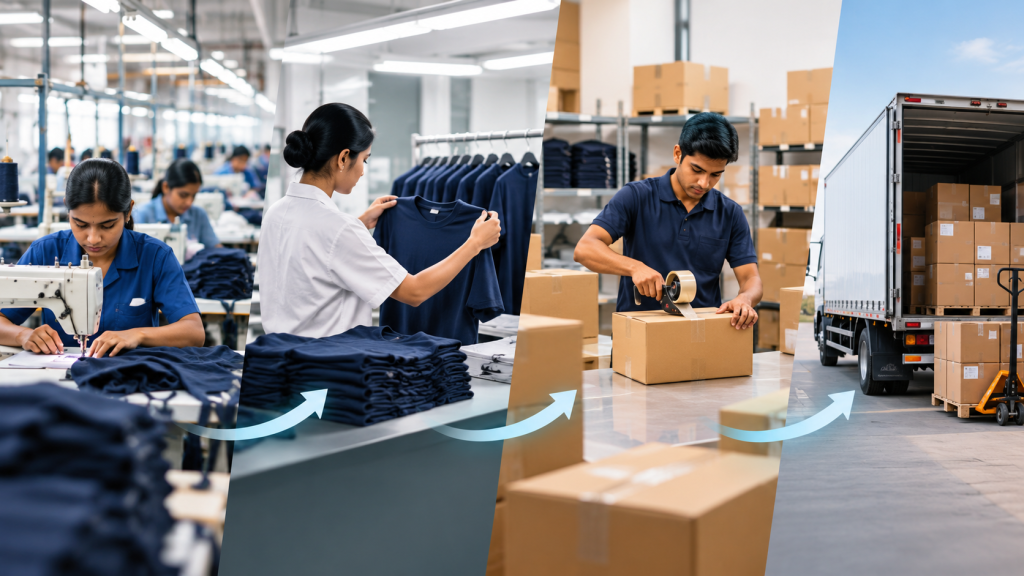
Objective This blog shows trade buyers how checks at finishing, packing and dispatch stop mistakes before a bulk garment order reaches the customer. Key Takeaways The last stages of an order are where counts, sizes and labels get confirmed. Structured checks before dispatch keep miscounts and mismatches away from your customer. One partner covering manufacturing through delivery means fewer hand-offs and fewer gaps. Planning a bulk order? Share your garment details, quantities and delivery needs with the Uniform World trade team and ask for a fulfilment quote. How many times has a bulk order left the factory looking perfect, only to reach the customer with sizes mixed up and cartons that don’t match the paperwork? It is a frustrating experience, and you can even feel blamed although the clothes are manufactured properly. That’s where clothing fulfilment services make a real difference, because they take care of the careful work between the last stitch and the front door. Whether you buy from a uniforms manufacturer in UK or manage supply for your own clients, the final stages decide how smoothly an order lands. Let’s walk through how finishing, packing and dispatch work together to cut errors. Table of Contents Why Do Errors Creep Into Bulk Garment Orders? How Do Garment Finishing Services Protect Quality Before Packing? What Do Garment Packing Services Add to Bulk Orders? How Do B2B Fulfilment Services Handle Dispatch? How Does Uniform Order Fulfilment Work Stage by Stage? What Should You Sort Out Before Your Next Order Leaves the Factory? FAQs Why Do Errors Creep Into Bulk Garment Orders? Errors usually start as small gaps between stages, such as a missed count or a wrong label. Moreover, they are easy to miss once garments are boxed, which is why clothing fulfilment services focus on catching them early. Where Mistakes Usually Begin Miscounts between the quantity ordered and the quantity packed Mismatches between size, label and carton Delays when a garment needs a last-minute fix How It Feels on Your Side You might think a small mix-up is no big deal. However, when a distributor has several sites waiting for stock, one wrong carton can hold up a whole delivery. Many buyers face this, and the stress usually lands on them rather than on the factory. How Do Garment Finishing Services Protect Quality Before Packing? Garment finishing services are the last close look at every piece before it moves on. Garments are inspected, pressed and prepared here so they leave production fully ready for delivery. What Happens at the Finishing Stage Final garment inspection and quality control Pressing, steaming and finishing Visual inspection and compliance checks Why Fixing Things Here Saves Time At Uniform World, garments are checked and adjusted if required before they are packed to trade and customer specifications. Furthermore, bulk order alterations can handle size or fit changes across large runs, so a small issue doesn’t grow into a big one. What Do Garment Packing Services Add to Bulk Orders? Garment packing services turn a pile of finished pieces into an order that is easy to count and easy to trust. Within clothing fulfilment services like ours, sorting, packing and labelling happen together. How Packing Is Organised Size sorting and order collation Folding, bagging and carton packing Labelling, tagging and barcode application Counting checks against the order Which Check Stops Which Mistake Here’s how each packing step ties to a common problem. Packing Step What It Covers Mistake It Helps Avoid Size sorting and collation Garments grouped by size and order Wrong sizes in a carton Folding, bagging and carton packing Neat, protected packing Damaged or untidy garments Labelling, tagging and barcodes Correct labels on each item Mismatched labels Count verification Totals checked against the order Miscounts How Do B2B Fulfilment Services Handle Dispatch? B2B fulfilment services cover the journey from packed carton to your customer’s door. Dispatch can be bulk, split or sent straight to an end client, depending on what your order needs. Sending Orders Where They Need to Go Direct-to-client and site-based shipping Multi-location and split deliveries Delivery documentation and tracking support Secure handling for bulk and repeat shipments Say a workwear brand orders uniforms for three sites. With split deliveries each site receives its own carton instead of one large shipment that someone has to sort. Buyers who need order fulfilment services UK wide can rely on nationwide shipping for trade accounts. Joining Up Manufacturing and Dispatch If your garments are made through the custom uniform manufacturing services at Uniform World, finishing and dispatch follow on without another hand-off. Our clothing fulfilment services and shipping work as one connected flow. How Does Uniform Order Fulfilment Work Stage by Stage? Uniform order fulfilment runs from sampling through to delivery. Reliable clothing fulfilment services give each stage its own check, so errors get caught before they travel on. Where Each Check Fits   Stage What Happens How It Cuts Errors Sampling and approval Pre-production samples approved for fit, construction and finish Problems found before bulk production Finishing and packing Garments checked, adjusted if required and packed to specification Faults caught before cartons close Pre-dispatch checks Size, quantity, labelling and packing accuracy reviewed Miscounts and mismatches stopped Direct shipping Dispatch to your location or end customer, including split deliveries Orders reach the right place Who Gets the Most Out of It Uniform suppliers Workwear brands Wholesale distributors These services are trade-only. Finishing and fulfilment orders start from 10 pieces per size. What Should You Sort Out Before Your Next Order Leaves the Factory? A smooth delivery often starts with a clear brief. Before you place your next order it helps to have these ready. Your size breakdown for each garment Every delivery location and whether you need split deliveries Any packing or labelling instructions from your own client Share these with the team and we’ll build order fulfilment services around your needs, with checks at every stage. Moreover, when each piece arrives counted, labelled and ready to use, your customers notice the care behind

embroidery screen printing and heat transfer
Uncategorized

Embroidery vs Screen Printing vs Heat Transfer: Which Is Best for Your Company Uniforms?

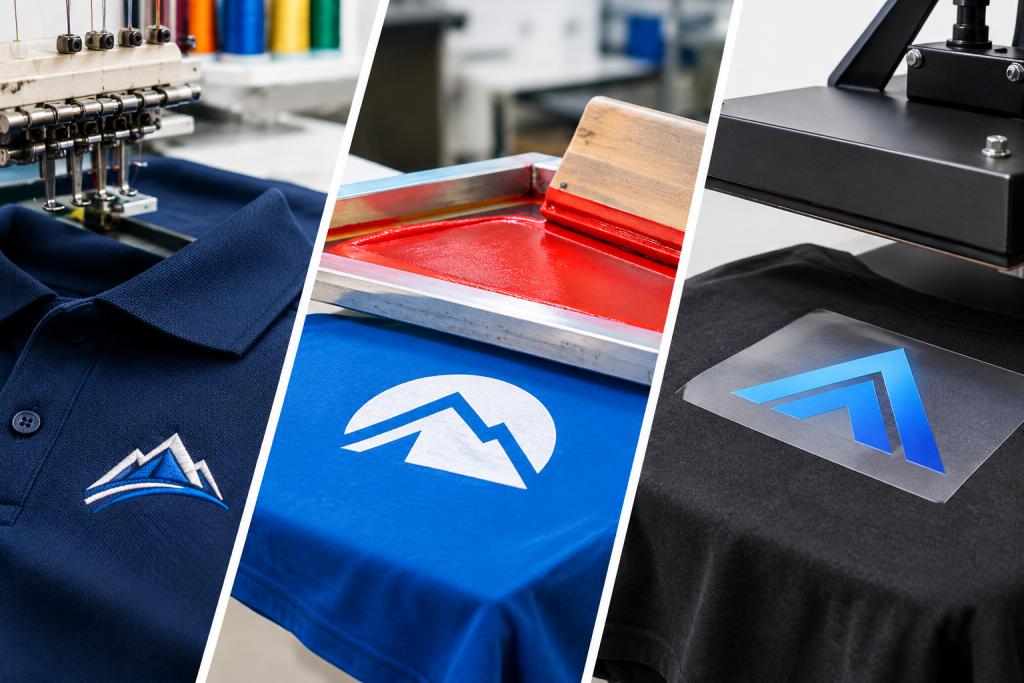
Objective Choosing between stitching and printing shouldn’t feel like a guessing game. This blog compares embroidery, screen printing and heat transfer so you can match the right one to your uniforms. Key Takeaways Embroidery gives a stitched, premium finish that suits logos on polos, shirts and workwear. Screen printing and heat transfer suit larger artwork and finer detail. The best choice depends on your garment, your design and how hard the uniform works every day. Not sure which method suits your order? Share your artwork and quantities with our trade team and we’ll point you in the right direction. Have you ever handed out a fresh batch of uniforms, only to spot the logo cracking or fading a few weeks later? Or opened the boxes and felt the branding looked flatter than the proof you approved? Many buyers face this, and it often comes down to the decoration method rather than the garment itself. As an embroidery company UK trade buyers rely on, we know how much that one choice shapes the final result. If you’re sourcing from a clothing manufacturer UK brands trust, choosing between embroidery, screen printing and heat transfer is one of the biggest calls you’ll make. So let’s break down each method and help you choose with confidence. Table of Contents What Are Embroidery, Screen Printing and Heat Transfer? Custom Embroidery: The Classic Choice for Embroidered Uniforms Custom Logo Printing: When Screen Printing or Heat Transfer Wins How to Choose the Right Method for Your Workwear Embroidery vs Screen Printing vs Heat Transfer: The Key Differences Ready to Put Your Brand on Every Uniform? FAQs What Are Embroidery, Screen Printing and Heat Transfer? Each method puts your brand on a garment in a different way. Once you know the basics, every other decision gets much easier. Embroidery Your logo is stitched into the fabric with thread. The result is raised and textured, and it feels like part of the garment itself. Screen Printing Ink is pressed onto the fabric to create your design. It’s usually chosen for larger, more involved artwork. Heat Transfer Your design, logo or label is applied using heat and pressure. Uniform suppliers and workwear brands like it for clear, consistent results across big runs. We also offer DTF printing for sharp detail and vibrant colour. Custom Embroidery: The Classic Choice for Embroidered Uniforms If you want a uniform that looks smart from day one, most buyers start here. These are the reasons why. A Premium Stitched Finish Logo embroidery on clothing gives your team a professional look. A supervisor in a polo with a neat stitched logo on the chest instantly looks the part, and customers notice that kind of care. Consistent Colours Across Batches Reorders often turn up months apart, so you’ll want every batch to match. At Uniform World, we use colour-matched threads and follow your exact brand colours, thread type and placement. Made for Hard-Working Garments Workwear embroidery is built to cope with industrial washing and daily wear without cracking or fading. When you work with an embroidery company UK based, your orders are decorated in UK facilities with room to scale. Custom Logo Printing: When Screen Printing or Heat Transfer Wins Stitching isn’t always the best fit. Large artwork or fine detail can look better printed, and that’s where these two come in. Screen Printing for Bigger Designs Need bold artwork, like a company name across the back? Screen printing is often the best choice for larger and more complex designs. Heat Transfer for Fine Detail Heat transfer suits intricate branding. Transfers can be made for cotton, polyester, blends and performance fabrics, so one method can cover a mixed uniform range. Easy on Busy Production Lines Transfers go on with a simple heat press, which keeps production moving. Ours are tested for durability and wash resistance. Whichever printing route you choose, ask your embroidery company UK partner for a sample first. Sampling is available before full runs. How to Choose the Right Method for Your Workwear No method wins every time. These four questions usually settle it. What Are You Decorating? Smart polos and shirts often suit stitching. Jackets, tunics or boilersuits may suit a different approach. The fabric matters, so mention it early. How Hard Will It Work? Will your team face industrial washing, heavy wear or long shifts? Tell your supplier up front. Our decoration methods are suited to workwear and industrial use. How Detailed Is Your Logo? A simple logo and one full of fine detail don’t always suit the same method. Send your artwork to our embroidery printing team, and we’ll tell you what works best. We can place branding on the chest, sleeve or back. What Does a Real Order Look Like? Take a facilities company with two teams. The supervisors wear polos with custom embroidery on the chest, which keeps them looking sharp. The cleaning crews wear tunics with a bold printed name across the back, easy to read from a distance. Both teams look like one brand, and each method suits the job it’s doing. One embroidery company UK partner can handle both. Embroidery vs Screen Printing vs Heat Transfer: The Key Differences Here’s everything side by side, so you can compare the three in seconds. Feature Embroidery Screen Printing Heat Transfer How it’s applied Thread stitched into fabric Ink pressed onto fabric Heat and pressure Look and feel Raised, textured, premium Flat printed finish Clean, sharp detail Best for Logos on polos, shirts and jackets Larger, more involved designs Intricate branding and labels Why buyers choose it Smart, long-lasting stitched look Bold artwork that stands out Fine detail across many fabrics Placement Chest, sleeve, back Chest, sleeve, back Chest, sleeve, back Ready to Put Your Brand on Every Uniform? The right method makes your team look sharper and helps your logo last. Send us your artwork, garment details and quantities, and our trade team will tell you the most efficient way to decorate your order. We can also handle

Scroll to Top